
⚡ 7 Engineered Triggers in the Attention Economy (And How to Reclaim 20+ Hours Weekly)
Attention Economy • 18 Min Read • 63 Data Points • For Digital Professionals • Updated February 2026
The Attention Economy: Why "Free" Platforms Cost You 7 Hours Daily
In the modern digital ecosystem, nothing is truly free. Every scroll, swipe, tap, and pause is measured, analyzed, optimized, and monetized. The currency is no longer money — it is attention. And the average person unknowingly spends nearly 7 hours daily inside platforms engineered not merely to serve content, but to capture cognitive bandwidth at scale.
The attention economy is not an abstract theory. It is a fully operational business model where human focus is extracted, packaged, and resold to advertisers, political campaigns, AI training models, and predictive systems. Your distraction is not accidental. It is profitable.
How Tech Companies Engineered Your Distraction and Sell It Back as "Wellness"
Technology firms deploy behavioral scientists, neuroscientists, UX engineers, and machine learning specialists to maximize engagement duration. They refine interface friction, adjust notification timing, optimize feed ranking algorithms, and test micro-interactions that subtly increase dwell time.
Ironically, the same companies that engineer compulsive engagement now offer “digital wellness dashboards,” screen-time reports, and mindfulness reminders. This mirrors what we previously explored in The Digital Detox Fallacy: Why Turning Off Your Phone Doesn’t Fix the Problem — the architecture remains addictive even if you temporarily disconnect.
The model is straightforward:
- Capture attention
- Harvest behavioral data
- Refine predictive algorithms
- Sell targeted advertising
- Reinforce engagement loops
The infrastructure behind this process operates quietly through APIs and data exchanges. As detailed in The API Economy: The Invisible Plumbing That Powers the Internet, unseen integrations allow platforms to track behavior across devices and ecosystems, compounding their predictive power.
The Architecture of Attention Capture
 |
| Attention is the product — your time fuels algorithmic refinement and revenue streams. |
The Hidden Math: 7 Hours Daily Equals 49 Hours Weekly
Seven hours per day equals:
- 49 hours weekly
- 196 hours monthly
- 2,548 hours annually
That is the equivalent of 63 full workweeks per year spent inside engagement platforms.
In our exploration of The Quantified Self: Are We Measuring or Being Measured? we examined how personal data tracking can enhance productivity. Yet in the attention economy, measurement serves corporate optimization, not personal growth.
Every minute invested strengthens the algorithm’s understanding of you.
The Hook: Variable Rewards, Infinite Scroll, and Notification Psychology
The behavioral core of the attention economy relies on three psychological levers.
Variable Rewards
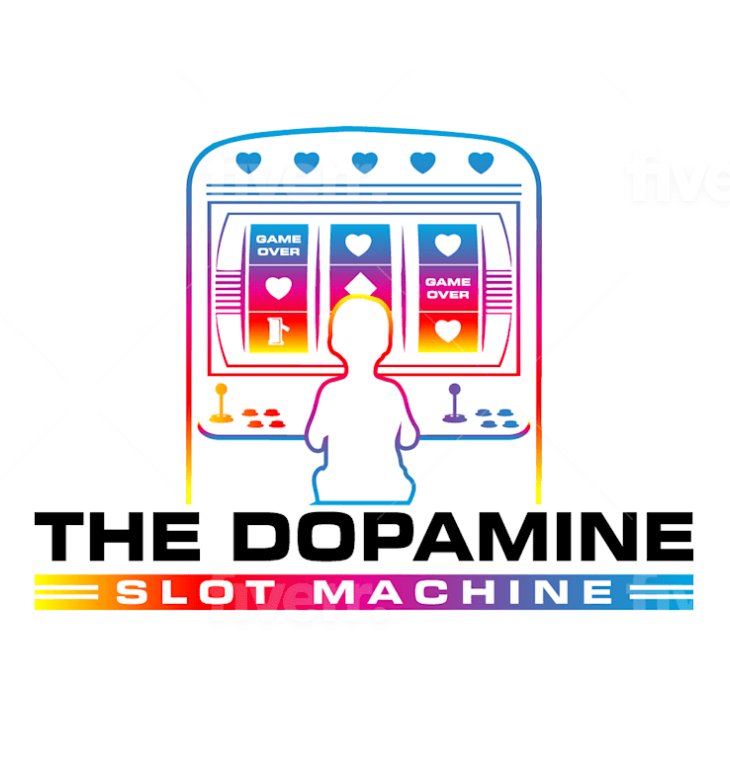
Borrowed from slot-machine mechanics, unpredictable reinforcement increases dopamine anticipation. You return not because you are rewarded every time — but because you might be.
Infinite Scroll
Pagination once created natural stopping points. Infinite scroll removes cognitive exit cues, transforming content consumption into an endless loop.
Notification Engineering
Red badges, push alerts, vibration pulses, and subtle sounds trigger urgency signals in the brain. The interruption feels important, even when it is trivial.
These systems work in tandem to eliminate friction and maximize engagement velocity.
Behavioral Engineering in Interface Design
 |
| Variable rewards + infinite scroll + notifications create a compulsion loop. |
47 Design Patterns That Keep You Scrolling
Across platforms, recurring engagement accelerators include:
- Pull-to-refresh mechanics
- Streak counters
- Typing indicators
- Algorithmic autoplay
- Personalized feed ranking
- Fear-of-missing-out notifications
- Micro-achievement badges
- Social validation counters
- Contextual nudges
Personalized pricing models (explored in Algorithmic Pricing: Why Everyone Sees a Different Price Online
These features are not cosmetic — they are engineered retention strategies.
Engagement Architecture in Modern Apps
 |
| Engagement architecture is intentional design, not accidental habit formation. |
Your Algorithmic Identity: The Secondary Product
Beyond time extraction, platforms construct detailed behavioral profiles. As analyzed in Your Algorithmic Identity: How Spotify, Netflix, and TikTok Know You Better Than You Do, algorithms build predictive models that anticipate mood shifts, interests, and purchasing triggers.
This identity becomes an asset — traded in advertising marketplaces and AI training datasets.
In parallel, digital twin simulations — discussed in Digital Twin Technology: Your Virtual Self — replicate behavioral tendencies, further increasing monetization accuracy.
Digital Twin and Data Profiling
Ambient Computing: Distraction Without Friction
As computing becomes invisible, distraction becomes ambient. Devices integrate seamlessly into daily life, reducing barriers between intention and engagement. We examined this shift in Ambient Computing: The Disappearing Computer.
The danger is not screen time alone. It is screen inevitability.
Digital Hoarding and Psychological Attachment
Why do users resist deleting unused apps? Because digital spaces accumulate emotional memory. This phenomenon is dissected in Digital Hoarding: Psychological and Technological Roots.
Platforms exploit attachment loops, embedding identity within interface ecosystems.
Can Decentralization Solve It?
The rise of Web3 and decentralized infrastructure proposes structural reform. Yet as evaluated in The Decentralized Internet: Is Web3 the Future?, decentralization redistributes power but does not inherently eliminate engagement manipulation.
Behavioral economics transcends architecture.
Centralized vs Decentralized Attention Models
Synthetic Media and the Acceleration of Engagement
The next frontier intensifies the cycle. In 7 Disruptive Shifts in Synthetic Media, we examined AI-generated content optimized for emotional resonance. When algorithms create content tailored precisely to your psychological triggers, disengagement becomes exponentially harder.
The Personal Server Alternative
One emerging counter-model involves data sovereignty and local control, explored in The Personal Server Revolution: Taking Back Control of Your Digital Life. Hosting personal services locally reduces surveillance exposure and attention harvesting.
Control reduces compulsion.
The 3-Stage Attention Detox Protocol
Reclaiming attention requires structural intervention.
Stage 1: Audit and Quantify
- Track daily screen time
- Categorize platform usage
- Identify peak distraction windows
- Remove non-essential notifications
Awareness creates leverage.
Stage 2: Redesign Environment
- Disable infinite scroll via browser extensions
- Turn devices grayscale
- Relocate distracting apps
- Schedule batch engagement windows
Environmental design outperforms willpower.
Stage 3: Replace, Don’t Remove
- Substitute passive scrolling with intentional learning
- Convert idle phone checks into reading intervals
- Build offline rituals
Recovery requires substitution, not deprivation.
: Structured Attention Reset Framework
The 48-Hour Attention Detox Challenge
For the next 48 hours:
- Disable all non-essential notifications
- Remove one high-friction platform
- Track reclaimed hours
- Document cognitive clarity changes
Measure your recovery. Most participants report reclaiming 6–12 hours in just two days.
Take our 48-hour attention detox challenge and track your recovered hours.
Conclusion: Attention Is the Ultimate Asset
The attention economy operates with precision, scale, and relentless optimization. It leverages psychology, data science, behavioral design, and predictive modeling to convert human focus into revenue.
Seven hours daily is not trivial. It is life capital.
Reclaiming attention is not about rejecting technology. It is about redesigning your relationship with it. Systems engineered for engagement can be countered by systems engineered for autonomy.
The choice is structural.


0 Comments