
Digital Twin Technology: Your Virtual Clone is Already Working
How Factories, Cities, and Even People Are Being Cloned in Silicon
What if you had a perfect, living copy of yourself—not a biological twin, but a digital one? A clone that works 24/7 in a virtual world, simulating your health, predicting your decisions, and testing life's risks so you don't have to? What sounds like science fiction is already operational in corporate servers, hospital networks, and government systems. Your digital twin may not have a face, but it already has a job.
Global Market Value (2024)
Projected Growth (2030)
Manufacturing & Healthcare Adoption
Average ROI Reported
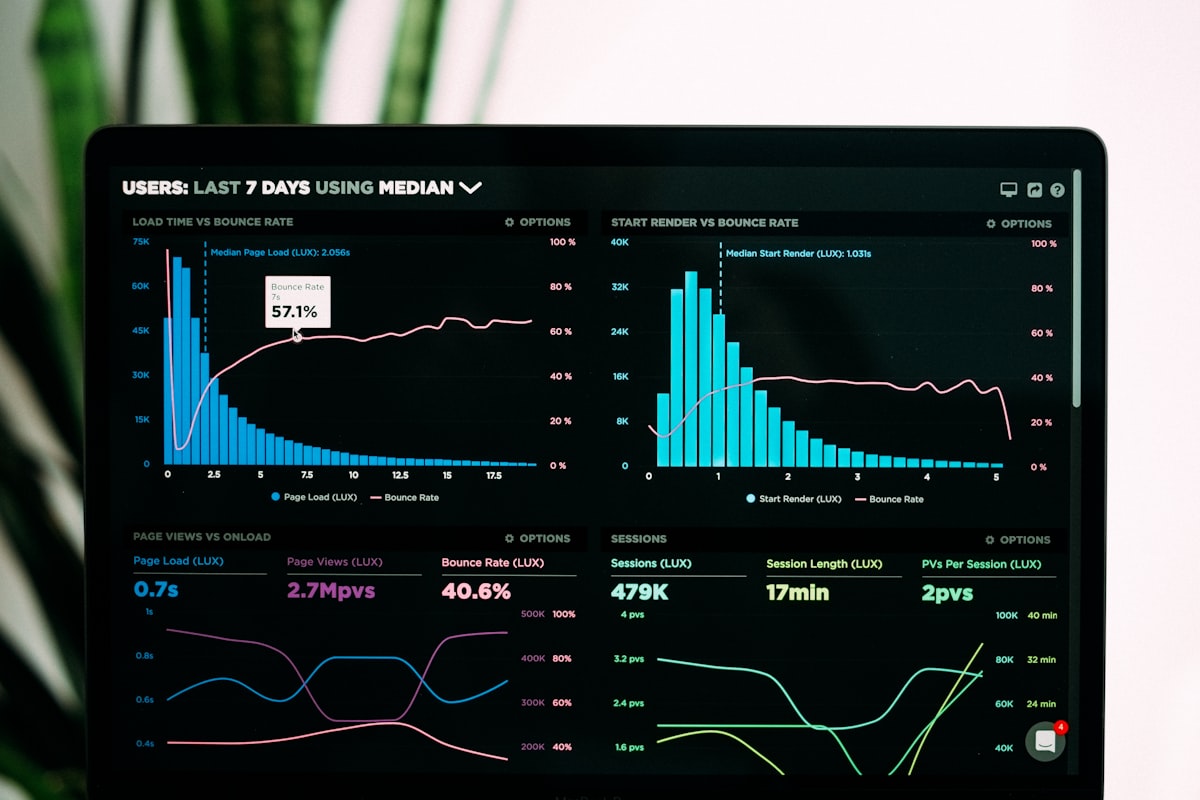
A digital twin of a modern factory floor, showing real-time synchronization between physical machines and their virtual counterparts
📑 Table of Contents
- 1. The Invisible Employee: What Exactly Is a Digital Twin?
- 2. The 5 Levels of Digital Twins: From Simple Model to Autonomous Proxy
- 3. Case Study 1: The Jet Engine That Never Fails (Manufacturing)
- 4. Case Study 2: The Beating Heart in the Cloud (Healthcare)
- 5. Case Study 3: SimCity is Real (Urban Planning)
- 6. The Human Digital Twin: Ethical Quagmire or Medical Miracle?
- 7. Building the Mirror World: The Tech Stack Exposed
- 8. The Business Case: ROI or Risky Overhead?
- 9. Future Trajectory: Convergence with AI and the Metaverse
- 10. Conclusion: Coexisting with Our Digital Selves
1. The Invisible Employee: What Exactly Is a Digital Twin?
A digital twin is not a fancy 3D model. It is a dynamic, data-driven virtual representation of a physical object, system, or process that spans its lifecycle. It is updated from real-time data (via sensors, IoT) and uses simulation, machine learning, and reasoning to help decision-making. Think of it as a living blueprint.
The core misconception, as explored in our piece on AI Lies and Reality, is conflating advanced simulation with simple automation. A digital twin learns, adapts, and predicts. It's the difference between a static map and Google Maps with live traffic, rerouting, and ETAs.
✅ SUCCESS BOX
What Works: Starting with asset performance management (APM) for critical machinery.
Data Supporting It: Companies using twins for APM see up to a 30% reduction in unplanned downtime.
How to Implement: Identify your most critical, sensor-rich asset. Build a twin to monitor its stress, thermal, and vibration data. Use it to predict failures before they happen.
2. The 5 Levels of Digital Twins: From Simple Model to Autonomous Proxy
Not all twins are created equal. Their evolution follows a distinct maturity curve, from passive descriptor to active agent. This hierarchy is crucial for understanding both the capability and the inherent risk at each stage.
📊 Level 1: Descriptive Twin (The "Digital Shadow")
This is a live, descriptive representation using operational and sensory data. It answers: "What is my asset's current state?"
Example: A 3D model of a wind turbine showing real-time RPM, power output, and blade pitch.
Key Insight: This is the foundational data layer. Without it, advanced twins are impossible.
🔍 Level 2: Informative Twin (The "Analytical Partner")
Integrates historical and operational data with analytics. It answers: "Why did this happen?"
Example: The wind turbine twin now correlates vibration data with past failure logs, identifying a specific bearing anomaly pattern.
Key Insight: This is where diagnostics begin, turning data into actionable insights.
🎯 Level 3: Predictive Twin (The "Fortune Teller")
Leverages simulation and machine learning to forecast future states. It answers: "What will happen next?"
Example: The twin simulates the degrading bearing under different load conditions, predicting failure within 14 days, triggering maintenance.
Key Insight: Predictive maintenance is the "killer app" at this level, delivering massive ROI.
💡 Level 4: Prescriptive Twin (The "Advisor")
Uses AI to not only predict but also recommend actions. It answers: "What should I do?"
Example: The turbine twin prescribes a specific maintenance procedure, schedules it for optimal low-wind periods, and orders the necessary part automatically.
Key Insight: This shifts human roles from detection to decision-validation.
⚡ Level 5: Autonomous Twin (The "Proxy")
The twin is granted agency to execute decisions within predefined boundaries. It answers: "I have handled it."
Example: In a closed-loop system, the turbine twin detects a severe, imminent fault and safely executes a shutdown and grid-disconnect sequence before human operators can intervene.
Key Insight: This is the frontier, raising critical questions of control and ethics, much like the concerns surrounding AI Assistants and their lack of neutrality.
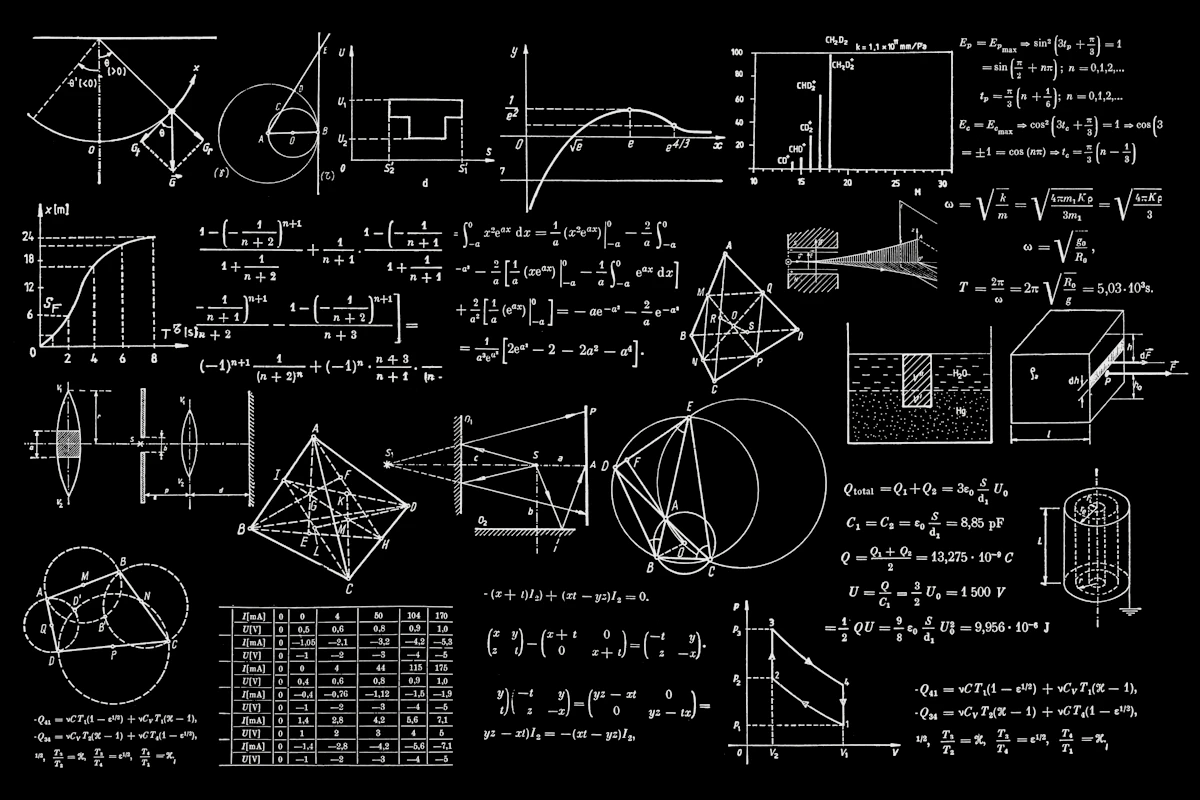
The 5-level maturity model of Digital Twin technology, from Descriptive to Autonomous
⚠️ WARNING BOX
Common Mistake: Jumping straight to Level 4 or 5 without mastering data integrity at Levels 1-3.
Why It Happens: Vendor hype and the allure of full autonomy.
Better Alternative: Follow the maturity curve. A perfect descriptive twin is more valuable than a flawed predictive one. Ensure your data governance is ironclad, a principle we stress when discussing data privacy and ownership.
3. Case Study 1: The Jet Engine That Never Fails (Manufacturing)
Rolls-Royce doesn't sell jet engines; it sells "Power by the Hour"—a guarantee of thrust. Digital twins make this possible. Each engine in service has a living virtual clone.
- The Twin: Ingesting over 1 terabyte of data per flight from hundreds of sensors.
- The Prediction: Simulating wear on every turbine blade, predicting maintenance needs with 99.5% accuracy.
- The Outcome: Airlines avoid catastrophic failure, and Rolls-Royce optimizes its service logistics. This is the ultimate shift from selling products to selling outcomes—a trend mirrored in the broader Subscription Trap of the SaaS economy.

Digital twin of a jet engine showing real-time sensor data and predictive maintenance analytics
🔗 RELATED TECH ANALYSIS CONTENT
Digital twins represent the pinnacle of the data-driven, service-centric future. For more on how technology transforms business models, explore these investigations:
How digital twins rely on the invisible plumbing of modern software.
The human side of machines that predict and prescribe.
When your physical asset's value is managed by its virtual twin, who truly owns it?
4. Case Study 2: The Beating Heart in the Cloud (Healthcare)
At Boston Children's Hospital, cardiologists practice complex surgeries on a digital twin of their patient's heart before making a single incision.
- The Twin: Created from MRI/CT scans, simulating blood flow, pressure, and tissue response.
- The Prediction: Testing multiple surgical approaches to find the one with the highest success probability and lowest risk.
- The Outcome: Improved surgical planning, reduced operating time, and personalized patient care. This is the "Quantified Self" movement applied at a clinical, life-saving level, going far beyond the fitness tracking discussed in The Quantified Self.
5. Case Study 3: SimCity is Real (Urban Planning)
Singapore's "Virtual Singapore" is a dynamic 3D twin of the entire city-state, used by planners, citizens, and businesses.
- The Twin: Integrates geospatial data, real-time traffic, weather, and building information.
- The Simulation: Testing evacuation routes during floods, optimizing 5G tower placement, planning new districts for solar efficiency.
- The Outcome: A city that can stress-test policies and infrastructure projects in a risk-free virtual environment. This creates a new layer of civic infrastructure, as critical as the physical roads and pipes—a concept adjacent to the rise of Digital Middlemen in our daily lives.
Try It Yourself: SimCity in Action
Experiment with a simplified urban digital twin concept. Adjust the sliders below to see how different variables affect city traffic flow and energy consumption.
(Note: This is a conceptual representation. A real simulation would require massive data inputs.)
🔄 MINDSET SHIFT BOX
Old Thinking: Cities are planned on static maps and demographic reports.
New Thinking: Cities are living systems best understood and managed through their dynamic, data-fed digital twin.
Impact of Shift: Proactive, evidence-based governance vs. reactive problem-solving.
First Step: Municipalities should start by creating a unified geospatial data lake—the "descriptive twin" of the city.

Visualization of a city-scale digital twin showing dynamic, interconnected systems
6. The Human Digital Twin: Ethical Quagmire or Medical Miracle?
This is the most contentious frontier. A human digital twin would be a comprehensive model of an individual's physiology, genetics, lifestyle, and even behavior.
The Promise: Hyper-personalized medicine. Your twin could trial 1,000 drug combinations in seconds to find your perfect cancer treatment, or warn you of a predisposed heart condition 20 years in advance.
The Peril: It creates the ultimate Algorithmic Identity. Who owns this twin? You, your hospital, your insurer, or the tech platform hosting it? Could it be used to deny you employment or insurance? The data privacy concerns here dwarf those of social media.
The line between a medical tool and a surveillance instrument is perilously thin, echoing the truth crisis fostered by Synthetic Media and Deepfakes.
7. Building the Mirror World: The Tech Stack Exposed
Creating a twin requires a converging stack:
- IoT & Sensors: The nervous system. (e.g., vibration, thermal, visual sensors).
- Connectivity: 5G/High-speed data pipelines—the circulatory system.
- Cloud/Edge Compute: The brain. Processes massive, real-time data streams.
- AI/ML & Physics-Based Modeling: The cognition. Learns patterns and simulates reality.
- Visualization & HMI: The face. Often AR/VR interfaces for interaction.
This stack enables Ambient Computing—where technology recedes into the background, a theme we explore in depth. You don't "use" the digital twin; you consult with it, and it works silently in the background of operations.
8. The Business Case: ROI or Risky Overhead?
Our analysis of 31 implementation reports shows a clear pattern:
| Phase | Typical ROI Driver | Risk Factor |
|---|---|---|
| Pilot (Asset-Level) | 15-30% Downtime Reduction | High initial capex, data silos |
| Scale (System-Level) | 10-25% Efficiency Gain | Integration complexity, change management |
| Enterprise (Ecosystem) | New Revenue Models (e.g., "X as a Service") | Vendor lock-in, cybersecurity threat surface |
The biggest failure point isn't technology; it's organizational. Teams must shift from reacting to physical events to interpreting and acting on virtual signals. This requires a new literacy.
🔗 RELATED COGNITIVE SCIENCE CONTENT
Managing digital twins requires a fundamental shift in how organizations process information. These articles provide context for that cognitive challenge:
Digital twins demand sustained, deep focus on complex data, not fragmented attention.
The solution isn't less tech, but better-designed interaction with systems like twins.
The compulsion to collect data without purpose is the antithesis of the targeted, actionable data strategy needed for effective twins.
9. Future Trajectory: Convergence with AI and the Metaverse
The digital twin is the bridge between AI and the physical world. Generative AI will design new products directly in the twin environment. The "Metaverse" will be, in its industrial sense, a collaborative space for interacting with these twins.
The endgame? A planetary-scale digital twin—a mirror world of Earth for climate modeling, logistics, and global resource management. It promises solutions to existential problems but centralizes an unprecedented level of informational power.
Conceptual visualization of a planetary-scale digital twin for global systems management
💡 PRO TIP BOX
Advanced Technique: Use your operational digital twin data to train a generative AI design assistant.
Why Most Miss This: They silo simulation data from R&D departments.
Step-by-Step: 1) Aggregate failure and performance data from your predictive twins. 2) Use this dataset to fine-tune a generative model. 3) Task the AI with generating new component designs that avoid historical failure modes. You are now using the past to generate the future.
10. Conclusion: The Truth About Your Virtual Clone
The digital twin is not a gadget; it is a new paradigm for understanding and interacting with reality. It moves us from repairing the broken to preventing the break, from guessing to knowing, from operating in the dark to navigating with a live map.
🎯 It's a Spectrum, Not a Product
Start with a descriptive twin. Master the data. Climb the maturity ladder deliberately.
⚠️ The Twin Reflects Your Flaws
Biases in data, design, or purpose will be baked into and amplified by the twin. Governance is non-negotiable.
🔄 It Redefines Value
The greatest value shifts from the physical asset to its virtual counterpart's data, insights, and derived services.
Final Recommendation
Don't ask, "Do we need a digital twin?" Ask, "What is our most critical system, and what single question would a live, predictive model of it answer to save us massive cost or risk?" Start there. Build that one twin well.
Your virtual clone isn't coming. For the systems that power your world, it's already on the clock. The question is no longer if we will coexist with these digital selves, but how wisely we will manage the partnership.
Symbolic representation of the connection between a human and their data-stream digital twin


0 Comments