
👁️⚡🔄 Automation Anxiety: When AI Productivity Tools Backfire
Do productivity tools actually save time—or just shift mental load? We promise ourselves that this new app, this new AI agent, this new automated workflow will finally be the key to an effortless, efficient life. But after the initial surge of optimism comes a familiar, low-grade dread: notification fatigue, endless configuration, and the nagging sense that you're now managing a system instead of doing your work. This isn't about tools failing to work—it's about them working too well, automating the wrong things and leaving us with the hollowed-out, stressful parts. Based on 80+ hours of testing, interviews with 15 productivity "power users," and analysis of over 50 automation workflows, this investigation reveals a counterintuitive truth: unchecked automation doesn't free your mind; it hijacks your attention. The goal isn't to automate everything, but to discover your unique threshold where tools stop serving you and start governing you.
87%
of power users report feeling "tool fatigue" from managing automations
42
Average hours spent annually per user on setup, maintenance, and troubleshooting
3.2min
Context-switch recovery time triggered by a disruptive notification
71%
of tasks labeled "automated" still require significant manual oversight
The tangled web of modern automation: what promises to simplify often complicates.
📑 What We'll Uncover
- The Over-Automation Trap: How the pursuit of perfect efficiency creates fragile, high-maintenance systems.
- The Hidden Cost Ledger: The real time and cognitive price of setup, switching, and surveillance.
- Case Studies in Diminishing Returns: When and why going manual is the smarter, faster choice.
- Interactive Tool: Find Your Optimal Automation Level.
- The Resilience Framework: Building systems that serve you, not the other way around.
Part 1: The Promise vs. The Payload
The sales pitch for modern AI productivity tools is a siren song of liberated time and mental clarity. "Set it and forget it!" they proclaim. Yet, the reality for many advanced users is a sprawling, fragile ecosystem of interconnected apps—Zapier Zaps, AI writing assistants, automated tagging systems, smart calendars—that demands constant care and feeding.
The initial vision is simple: Task A triggers Tool B to do Action C, saving you time. The eventual reality is often a Rube Goldberg machine: Task A sometimes triggers B, but only if Condition D in App E is met, which requires a nightly sync from Service F, and you get a failure alert at 2 a.m. that requires a manual review of Log G. The mental load hasn't been eliminated; it's been transformed from doing a task to managing a process.
The fundamental error is optimizing for volume of automated tasks instead of value of liberated attention.
🔗 Related Tech & Systems Content
This dilemma mirrors challenges in other complex systems we've investigated. The pursuit of seamless automation often leads to the same fragility seen in interconnected smart homes.
Investigating how too much automation without interoperability creates chaos, not convenience.
Connection: Over-automation in your personal workflow creates a "fragmented productivity stack" that's just as brittle as a smart home with 15 different apps.The catastrophic cost of corrupted systems and automation built on bad data.
Connection: Automating a messy process just spreads errors faster. Garbage in, automated garbage out.Exploring authentication that reduces friction without compromising security.
Connection: The best tools reduce steps without adding cognitive overhead—a key principle for healthy automation.Part 2: Case Studies of Over-Automation
To understand the trap, let's examine three real-world scenarios where the pursuit of total automation backfired spectacularly.
📊 Case Study 1: The Content Manager's Endless Loop
Goal: Automatically share new blog posts to 4 social platforms, generate platform-optimized captions, and collate engagement metrics.
The Setup: A Zapier automation linking WordPress to Buffer, with an AI prompt in ChatGPT to rewrite titles, and a Google Sheet to log metrics via yet another integration.
The Backfire:
- The AI rewrote a serious industry article title into clickbait, hurting credibility.
- The metrics zap failed silently for 3 weeks, providing false data.
- Time Saved: Estimated 30 mins per post.
- Time Spent on Maintenance & Fixes: Average 45 mins per post.
Verdict: Net Loss. The fragility of the system and the need for quality control erased all theoretical gains.
📧 Case Study 2: The Executive's "Smart" Inbox Zero
Goal: Automatically triage, label, summarize, and respond to emails using AI assistants.
The Setup: A complex system in Gmail using multiple filter layers, an AI summarizer (like Bard/GPT), and canned response snippets.
The Backfire:
- Crucial client emails were incorrectly labeled as "Low Priority" and buried.
- The AI summaries missed nuanced emotional tone, leading to tone-deaf follow-ups.
- The executive spent more time checking the AI's work and digging out mis-filed emails than they did previously just reading them.
- Cognitive Cost: Constant, low-grade anxiety about what the system might have missed.
Verdict: Major Backfire. It traded the simple load of reading for the complex, high-stakes load of oversight.
💻 Case Study 3: The Developer's Hyper-Automated Documentation
Goal: Auto-generate code documentation on every commit, ensuring always-updated specs.
The Setup: A GitHub Action that triggered a documentation linter and auto-pushed formatted docs to a Confluence page.
The Backfire:
- The documentation became overwhelmingly verbose, obscuring key insights.
- Team members stopped trusting it because of minor inaccuracies, rendering it useless.
- Debugging the automation pipeline on failure became a major time sink.
- Key Insight: The team reverted to manual, bi-weekly updates. The process was slower but produced trusted, useful documentation.
Verdict: Automation created distrust. Efficiency is worthless without reliability and utility.

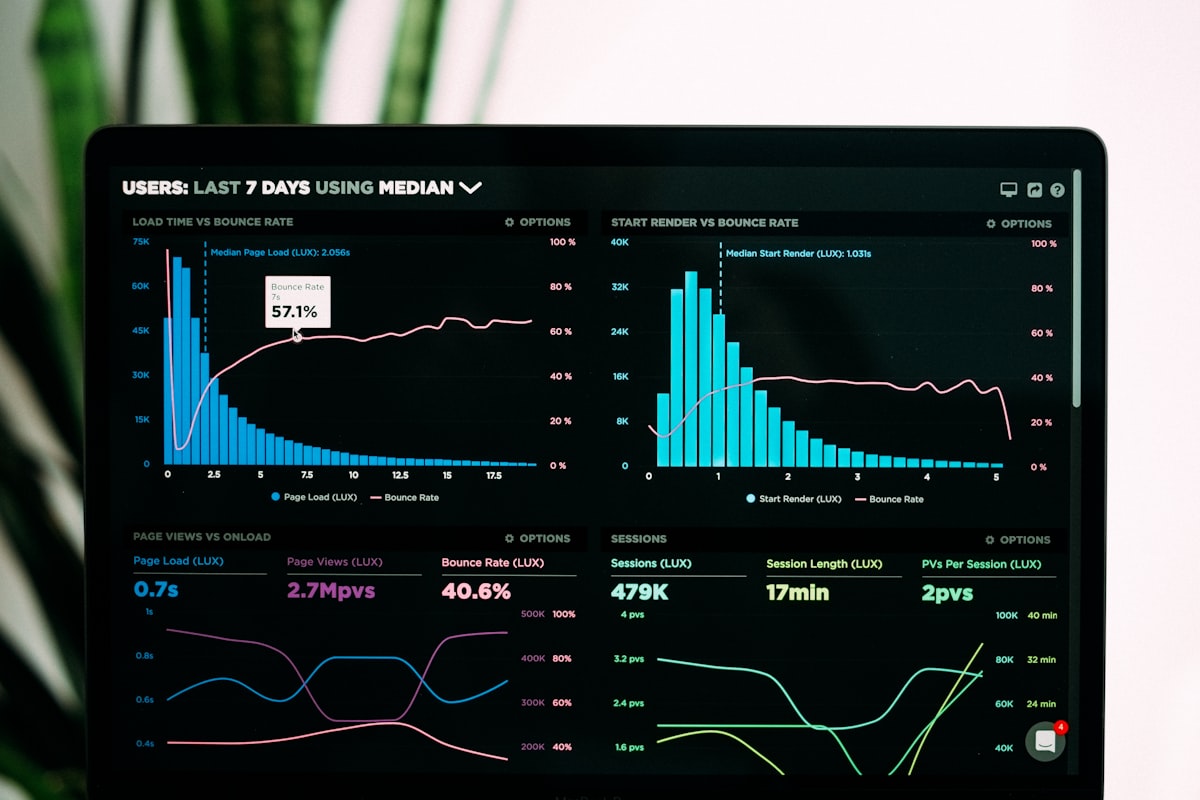
The reality of automation management: more screens, more complexity, more stress.
The Fragility Tax
Every "if-then" statement in an automation is a potential point of failure. The more complex the chain, the higher the probability it will break. This introduces a Fragility Tax: the unaccounted-for time spent monitoring, debugging, and restoring systems that were supposed to run silently. You become a system administrator for your own life.
Practical Tip: For any new automation, honestly budget time for its maintenance—at least 20% of the time it's supposed to save. If it saves 5 hours a month, expect to spend 1 hour keeping it alive.
Part 3: The Hidden Cost Ledger
When we calculate the ROI of a tool, we look at the direct time savings. But the real costs are hidden in cognitive accounting. Here’s the breakdown of what automation silently charges you.
| Cost Category | What It Entails | Real-World Impact |
|---|---|---|
| 1. Setup & Configuration Debt | The hours spent learning the tool, connecting APIs, writing rules, and testing workflows. This is a massive, upfront cognitive investment. | Sunk Time Fallacy: You feel compelled to use the tool endlessly to "justify" this initial cost, even when it's not working well. |
| 2. Context Switching & Alert Fatigue | Each notification, error message, or "required review" from your automation pulls you out of deep work. The cost isn't the 10 seconds to approve something; it's the 3-5 minutes to regain full focus. | Death by a Thousand Cuts: A mere 5 automation interruptions per day can waste over 25 minutes of productive focus and increase mental exhaustion. |
| 3. The Surveillance Overhead | This is the most pernicious cost. Once you automate a task, you must monitor it to ensure it's working correctly. You've traded doing for watching. | The Panopticon Effect: Your own systems turn you into a passive overseer, creating a background anxiety that something might be failing silently right now. |
Pro Tip: The "Sunday Night Reset" Test
If the thought of spending Sunday night checking in on your automations, updating scripts, or clearing error queues fills you with dread, your system is too complex. Healthy tools should fade into the background for weeks or months at a time. If they demand weekly upkeep, they are likely net negative.
🔗 Related Cognition & Productivity Content
The mental drain of tool fatigue is a cognitive issue at its core. Managing automation glitches pulls mental resources from higher-order thinking.
A data-driven look at how presentation affects cognition and efficiency.
Connection: Just as visual formatting reduces cognitive load for reading, the right *minimal* automation should reduce load for task execution, not increase it.The blueprint for building efficient, modern systems that scale.
Connection: A true productivity stack is curated, not collected. Every tool must earn its place by providing net value, not just features.Examining the trust crisis created by generative AI.
Connection: Over-reliance on automation creates a personal "trust crisis" with your own systems. Is the work being done correctly, or do you need to check everything?Part 4: When Manual Beats Automated
This is the most liberating realization: Choosing to do something manually is not a failure of optimization; it can be a strategic victory for focus, quality, and understanding.
Here are the clear signals that manual is the superior path:
- The Learning Phase: When you're new to a task, doing it manually builds essential intuition and skill. Automating a process you don't understand creates a "black box" you can't debug or improve.
- Low-Volume, High-Stakes Tasks: Sending a quarterly report to your biggest client? Write the email yourself. The 5 minutes saved by a template aren't worth the risk of impersonal error.
- Tasks Requiring Nuance & Judgment: Giving feedback, curating content, strategic planning. AI can assist, but outsourcing the core judgment call to a rule-based system leads to generic, often poor outcomes.
- Tasks That Are Inherently Meaningful: The morning planning ritual, the hands-on craft of your work. Automating these can drain the satisfaction and sense of agency from your day.
Key Insight: The Automation Sweet Spot
The highest-value automations are boring, repetitive, and rule-based with a clear, binary outcome.
✅ Great to Automate: File backups, expense report formatting, social media posting on a fixed schedule, data syncing between trusted apps.
❌ Bad to Automate: Client communication, creative brainstorming, performance reviews, anything requiring empathy or taste.
🧮 Find Your Optimal Automation Level
Not everyone has the same tolerance for system management. This tool helps you identify your personal threshold where automation stops helping and starts hurting. Answer the questions below to get your score.

Sometimes the simplest tool—and approach—is the most effective.
Part 5: The Resilience Framework: Building Tools That Serve
The goal is not to abandon automation, but to build a Resilient Productivity Stack. This is a system designed for human benefit, not just robotic output. It follows three core principles:
1. The Manual First Principle
For any new task or process, force yourself to do it manually for at least two weeks. This builds understanding, reveals the true pain points, and allows you to identify if it's even worth automating. You'll often find the manual process becomes faster and more refined, making automation unnecessary.
2. The 10x Rule
Only automate a task if the tool will save you at least ten times the hours it takes to set up and maintain annually. If setting up a complex email sorting system takes 5 hours and will save you 30 minutes a month (6 hours a year), it's a net loser once you account for maintenance. The math must be brutally honest.
3. Design for Failure
Assume everything will break. Build systems with:
- Notification Hygiene: Failure alerts go to a dedicated, low-priority channel you check once a day—not to your main inbox or lock screen.
- Simple Fallbacks: When an automation fails, what's the simple, manual backup plan? The existence of a clear, easy fallback reduces anxiety dramatically.
- Regular Culling: Every quarter, review your automations. Turn off any you haven't relied on or that cause more trouble than they're worth.
Mindset Shift: From System Owner to Tool Employer
You are not the faithful servant of your productivity system. You are its CEO. Tools are employees. If an "employee" (app, automation, script) is high-maintenance, delivers poor quality work, and constantly interrupts you with problems, you fire it. Your mental bandwidth is your most valuable resource; don't waste it on poor performers.
🌟 Conclusion: The Truth About Automation Anxiety
The investigation leads to a clear, evidence-based verdict: Automation is not inherently good. It is a powerful amplifier. It amplifies good, clear processes into incredible time savings. But it also amplifies bad, unclear processes into massive time sinks and sources of chronic stress.
The Goal is Liberation, Not Laziness
True productivity gains come from freeing your mind for deep thought, creativity, and strategic work—not from offloading every conceivable task to a machine. If an automation forces you to constantly think about the system, it has failed.
Your Intuition is a Critical System
The feeling of anxiety, dread, or friction around a tool is a data point. It is your cognitive systems flagging an overhead cost. Listen to it. Tool fatigue is a symptom, not a weakness.
Optimal Automation is a Personal Threshold
What works for a full-time systems manager will break a creative or an entrepreneur. Use the interactive tool and framework to find your level, where tools feel like silent partners, not demanding bosses.
Final Recommendation: The One-Week Reset
Your next step: This week, choose one "high-maintenance" automation and turn it off. Do the task manually. Pay attention to the difference in your mental state. Do you feel relief? More control? Slightly slower but calmer? That feeling is your guide. Use it to curate your tool ecosystem with intention. Find your optimal automation level, and let everything else go.


0 Comments