
Your Brain on Algorithms: How AI is Rewiring Our Attention Spans

Our minds are constantly interfacing with a digital ecosystem designed to capture and hold our attention.
⚡ The Algorithmic Attention Crisis: Quick Facts
📋 In This Article: Reclaim Your Focus
The Neuroscience of Interruption vs. Deep Work
To understand why algorithms are so effective, we must first understand the brain's two competing systems for attention. Your ability to focus deeply—to enter a state of "flow" where time falls away and productivity soars—is governed primarily by your prefrontal cortex (PFC). Think of the PFC as the CEO of your brain. It's responsible for executive functions: long-term planning, complex problem-solving, decision-making, and suppressing impulses. Engaging the PFC requires significant cognitive energy. It's slow, deliberate, and easily disrupted.
Contrast this with your brain's older, more primal system for vigilance: the limbic system, particularly the amygdala. This is your brain's alarm center. It's fast, automatic, and designed to scan for threats and opportunities. A notification ping, a bold headline, a flash of movement on screen—these are interpreted as potential "opportunities" or novel stimuli, triggering an orienting response. Your amygdala screams, "Pay attention to this! It might be important!" and instantly pulls resources away from your PFC.
"Every time we switch tasks, we incur a 'cognitive tax' or switching cost. Our brains must disengage from one rule set and activate another. This constant reconfiguring depletes our finite neural resources and dramatically reduces the quality of our work."
This creates a neurological tug-of-war. Deep work requires sustaining activation in the PFC, while algorithmic feeds are designed to constantly trigger the limbic system's orienting response. The result is a state of chronic, low-grade stress and cognitive fragmentation. We train ourselves to be shallow thinkers, jumping from stimulus to stimulus, because that's what the environment rewards. This constant switching creates what neuroscientists call "attentional residue"—where part of your cognitive capacity remains stuck on the previous task, making deep focus increasingly difficult.
How Recommendation Engines Hijack Dopamine
If interruption were merely annoying, we could resist it. But algorithms weaponize our brain's fundamental reward chemical: dopamine. Dopamine is often mislabeled as the "pleasure" chemical; it's more accurately the "seeking and prediction" chemical. It’s released not when you get a reward, but when you anticipate one. This anticipation mechanism is evolution's way of keeping us motivated to seek food, shelter, and social connection—but technology has learned to exploit this ancient wiring with frightening efficiency.
This is where the architecture of social media and streaming platforms becomes diabolically effective. They are built on variable reward schedules—the same psychological principle that makes slot machines so addictive. Psychologist B.F. Skinner discovered in the 1950s that animals would press levers most compulsively when rewards were unpredictable. Tech companies have applied this insight to human behavior at scale, creating digital environments where the next reward could be one scroll away—or a hundred.
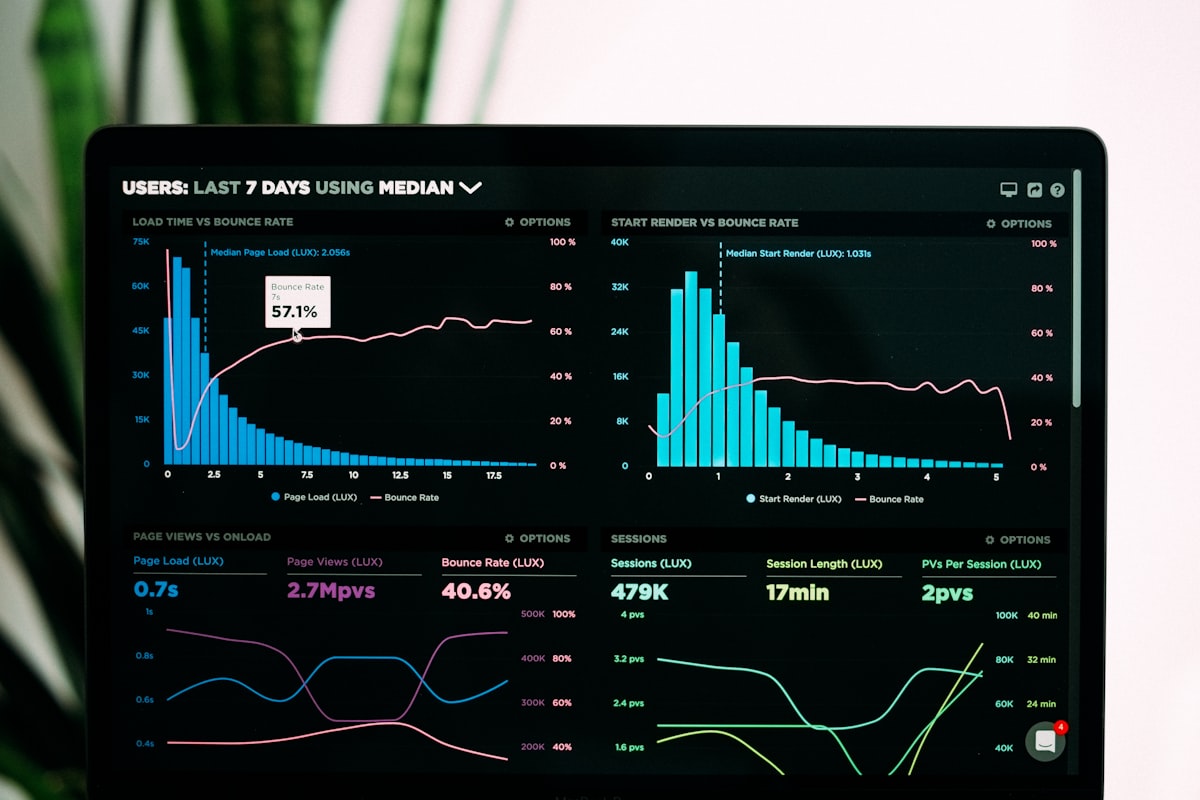
Endless, unpredictable feeds create a powerful dopamine-driven feedback loop that keeps us scrolling.
Consider the mechanics:
- The Pull-to-Refresh Gesture: It mimics a slot machine lever. You pull down, not knowing if the next batch of content will bring a funny meme, a friend's engagement, or shocking news. The uncertainty triggers a dopamine spike that reinforces the behavior. Each pull becomes a mini-gamble with your attention as the currency.
- Autoplay & Infinite Scroll: They remove natural stopping points. The next video plays automatically; there is no "next page" button to click, just seamless, endless content. This eliminates the moment of conscious choice to stop, creating what designers call "frictionless engagement"—but what neuroscientists recognize as engineered compulsion.
- The "Like" & Notification System: These are micro-rewards. You post something and wait. The dopamine hits come from the potential for likes and comments, keeping you checking the app repeatedly. Each red notification badge is a promise of a potential social reward, tapping into our deep-seated need for social validation and connection.
- Personalization Algorithms: Platforms track thousands of data points about your behavior to serve content that's just slightly more engaging than what you saw before. This creates a "hedonic treadmill" where your brain constantly seeks slightly stronger stimuli, leading to desensitization over time.
The hijacking is complete: The limbic system is triggered by novelty (the alert), and the dopamine system is activated by the anticipation of a reward (what’s in the alert/next scroll). Your brain’s ancient wiring is being exploited to keep you in a state of perpetual, distracted seeking. What's particularly insidious is that this happens largely outside conscious awareness—the algorithms work on our subconscious drivers, making resistance feel like fighting our own biology.
4 "Digital Fasting" Techniques to Reclaim Focus
Regaining control isn't about deleting technology; it's about changing your relationship with it. Think of it not as a diet, but as a "digital fast"—intentional periods of abstention to reset your neural pathways. Just as intermittent fasting can reset metabolic health, digital fasting can reset cognitive health. Here are four science-backed techniques that work by creating new neural patterns:

Creating space for stillness is the first step in breaking the cycle of constant stimulation.
1. Implement a "Neuro-Schedule" (Time-Blocking for Your Brain)
Your brain has natural energy rhythms. Leverage them. Research shows that most people experience peak cognitive performance in the late morning, with a secondary peak in the late afternoon. Design your schedule around these natural fluctuations:
- Deep Work Blocks (90-120 min): Schedule 1-2 of these in your morning, when PFC function is typically highest. During this time, turn on "Focus Mode" (phone), use a website blocker (like Freedom or Cold Turkey), and work offline if possible. This protects your high-quality attention. Neuroscience shows it takes about 23 minutes to reach deep focus after an interruption—protecting these blocks is non-negotiable.
- Administrative Clusters: Batch all shallow tasks—email, messages, calls, scheduling—into defined low-energy periods (e.g., post-lunch). This prevents task-switching from fragmenting your high-quality attention. Research from the University of California Irvine found that office workers average just 3 minutes on any given task before switching—this constant shifting destroys productivity.
- Strict "No-Input" Periods: Designate the first 60-90 minutes after waking and the last 60 minutes before bed as screen-free. This prevents the hijacking of your morning intention-setting and protects sleep quality, which is crucial for cognitive recovery. The blue light from screens suppresses melatonin production by up to 50%, disrupting sleep architecture and next-day focus.
2. Conduct a "Notification Autopsy"
Go through every app on your phone and computer and ask: "Does this notification serve my priorities, or the app's engagement metrics?" Turn off all non-human notifications. The only things allowed to interrupt you should be messages from actual people (family, key colleagues). Disable badges, sounds, and banners for social media, news, and promotional apps. The science is clear: each notification creates a "cue-induced wanting" that fragments attention. A study at Florida State University found that even the mere presence of a smartphone reduces cognitive capacity—what they call "brain drain." By eliminating notification cues, you remove the triggers for distraction before they can hijack your attention.
3. Practice "Single-Tasking" with a Physical Timer
The Pomodoro Technique works because it creates a tangible, time-bound container for focus. When you know there's a designated break coming, your brain can relax into the present task rather than constantly scanning for escape routes.
- Set a physical kitchen timer (not your phone) for 25 minutes. The physicality matters—it creates a sensory cue that your brain associates with focused work.
- Work on a single task until the timer rings. If other thoughts arise, jot them on a notepad to address later. This externalizes distractions without derailing focus.
- Take a strict 5-minute break (stand up, look out a window, stretch). Micro-breaks improve sustained attention by allowing the PFC to briefly replenish its resources.
This ritual trains your brain to associate a specific cue (the timer starting) with deep focus, and the break prevents depletion. Over time, this creates what psychologists call "conditioned focus"—your brain learns to enter a focused state when triggered by the timer ritual, much like how Pavlov's dogs learned to salivate at a bell.
4. Create "Friction" for Distraction
Make desired behaviors easy and undesired behaviors hard. This principle from behavioral psychology is crucial for overcoming the frictionless design of distracting apps. If distraction requires effort while focus comes easily, you've architecturally supported your intentions.
- Desired (Focus): Keep a notepad on your desk for random thoughts. Have your work materials ready before your focus block starts. Use apps like those in the Digital Minimalist's Toolkit that support rather than sabotage focus.
- Undesired (Distraction): Log out of social media after each use. Move social media icons off your home screen and into a folder. Use browser extensions that add a 10-second delay before loading distracting sites, giving your PFC a moment to intervene. Change your phone to grayscale mode—research shows this reduces the dopamine hit from colorful notifications by up to 40%.
- Environmental Design: Create physical and digital environments that support focus. This might mean using a dedicated workspace, employing noise-cancelling headphones, or implementing a Deep Work OS on your computer.
The key insight: willpower is finite. By designing environments that make the right choices automatic, you conserve cognitive resources for the work that matters.
The 7-Day Attention Reset Challenge
Ready to rewire your habits? Commit to this one-week protocol. Track your observations in a journal. The goal isn't perfection but awareness—noticing how your mind responds when released from algorithmic control. Each day builds upon the last, creating cumulative benefits that extend beyond the challenge period.
📥 Your 7-Day Reset Tracker
Download our free printable journal template to track your progress, energy levels, and insights throughout the challenge. Research shows that tracking behavior increases adherence by 40% and provides valuable data about your personal attention patterns.
PDF Format | 5 Pages | Ready to Print
| Day | Core Challenge | Supporting Action |
|---|---|---|
| Day 1-2: Detox | No social media or news apps. Access these sites only on a desktop browser if absolutely necessary. Notice the withdrawal symptoms—the phantom vibrations, the compulsive reaching for your phone. These are signs of neural rewiring in action. | Delete the apps from your phone. Notice the urge to reach for your phone idly. Track how many times you instinctively reach for it. This baseline measurement reveals your current level of conditioned behavior. |
| Day 3-4: Reclaim Mornings | First 60 minutes screen-free. Use this time for meditation, reading a physical book, journaling, or a mindful walk. This protects your brain's most valuable hours from algorithmic hijacking and sets a focused tone for the day. | Charge your phone outside the bedroom. Use a traditional alarm clock. Research shows that people who keep phones in the bedroom experience 46 minutes less sleep and report lower sleep quality. Consider exploring future technologies like AR glasses that might eventually replace smartphones with less intrusive interfaces. |
| Day 5: Notification Audit | Turn off all non-essential notifications. The goal is "silence by default." This reduces the constant low-level anxiety of potential interruption and reclaims your brain's alerting system for genuine priorities. | Go through every app's settings. The rule: If it's not a human trying to reach you in real-time, it can wait. Most people find they can eliminate 80-90% of notifications without negative consequences. This single action can reduce daily interruptions by hundreds. |
| Day 6: Deep Work Sprint | One 90-minute focused block. Choose an important, non-urgent project. Use time-blocking and full "Do Not Disturb" mode. Notice how different your mind feels when allowed to settle into deep work versus its usual fragmented state. | Prepare everything you need beforehand. Inform others you'll be unavailable. This social contract protects your focus time. Consider how emerging technologies like quantum computing might eventually help solve complex problems that require sustained attention—or create new forms of distraction. |
| Day 7: Reflect & Design | Review your week. What felt better? What did you miss? What was just noise? This meta-cognitive reflection solidifies learning and helps you design a sustainable personal system. | Create a personal "Tech Constitution"—3-5 rules for your ongoing tech use (e.g., "No phones at the dinner table," "Saturday digital sabbaths"). Written rules increase compliance by creating clear boundaries. Consider how AI and creative algorithms might eventually help design better digital environments that support rather than sabotage human flourishing. |
Conclusion: Towards a More Conscious Future
The fight for your attention is not a fair one. You are bringing a conscious, effortful mind to a battle against armies of engineers optimizing for your unconscious impulses. The path forward is not rejection, but mastery.
This begins with algorithmic awareness—recognizing the design tricks played on your neurology. It continues with the deliberate practice of attention training, treating your focus like a muscle that must be strengthened and protected. The 7-Day Reset is not an end, but a beginning; a diagnostic tool to show you what your mind feels like when it's not constantly being pulled in a dozen directions.
What we're witnessing is nothing less than a transformation of human consciousness itself. Just as the printing press changed how we think by externalizing memory, and the clock changed how we experience time by segmenting it into measurable units, algorithmic media is changing how we attend—splintering our focus into ever-smaller fragments. But unlike previous technological shifts, this one operates largely below the level of conscious awareness, making it particularly insidious and difficult to resist.
The stakes are high. Chronic distraction isn't just annoying—it has measurable costs. Research links heavy social media use with increased anxiety, depression, and loneliness. The constant task-switching reduces IQ equivalent to losing a night's sleep or smoking marijuana. And perhaps most concerningly, it may be changing our very capacity for deep thought—the kind of sustained reflection that leads to innovation, wisdom, and meaningful human connection.
But there is hope. Neuroscience shows that the brain remains plastic throughout life. With deliberate practice, we can strengthen the neural pathways associated with sustained attention. We can learn to recognize and resist the dopamine traps. We can design our environments and habits to support rather than sabotage focus.
The ultimate promise is this: by reclaiming your attention from algorithmic hijacking, you reclaim something far more valuable—your time, your cognitive clarity, and your capacity for the deep, meaningful work that defines a purposeful life. You begin to use technology as a tool, not be used by it as a trigger. In a world engineered for distraction, your focused attention becomes your most radical and powerful asset.
As we move into an era of even more sophisticated AI and immersive technologies, this skill of attention management will only become more critical. The algorithms will get smarter, the distractions more compelling. But so too can our understanding and our strategies for resistance. The choice isn't between embracing or rejecting technology, but between being controlled by it or learning to control it. Between having our attention stolen and learning to give it freely, intentionally, to what truly matters.
Your attention is the most valuable resource you have. It's time to start treating it that way.
About Thinking in Years
This article was created for Thinking in Years, exploring how technology shapes human cognition, culture, and our future. We believe in using technology with intention, not being used by it. Our mission is to provide research-backed insights and practical strategies for thriving in the digital age.


0 Comments